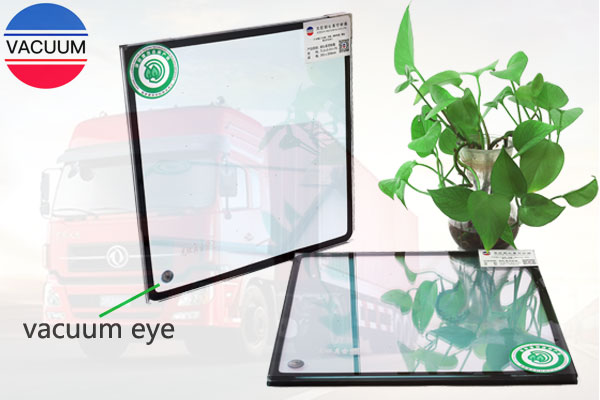
✬The vacuum glass should be packed in a wooden case or fixed by an A-frame during transportation. Vertical transportation is required during transportation, and an elastic spacer material should be sandwiched between the two pieces of vacuum glass to prevent transportation from damaging the quality of the product, such as scratches, Blast etc.
✬When unpacking, the side of the unpacked wooden case needs to be slightly raised on the side of the unpacking, and the back should be supported with an immovable object, so that the box is slightly tilted back, avoiding the vacuum glass falling down when cutting the packaging tape.
✬Vibration and impact should be prevented during handling, installation and use of vacuum glass, especially the point-contact impact caused by breakage.
✬When handling, only vertical handling can be used, and flat handling can easily cause damage. If it is really necessary to lay flat due to special reasons, it should be ensured that the vacuum glass has no curved surface deformation, and additional force points should be added to each edge to reduce damage caused by deformation.
✬The strength of tempered vacuum glass is higher than that of ordinary glass. In most cases, it will not be broken immediately after the edge is bumped, but it will burst from the damaged corner after a few days. Therefore, tempered vacuum glass is packed, unpacked, handled, installed, etc. During the process, the corners must be protected, even minor bumps are not allowed.
✬The good thermal insulation performance of vacuum glass requires that it is not allowed to be exposed to the sun during storage and transportation. Equipped with proper rain and moisture-proof measures, vacuum glass should be stored in a dry, ventilated place with a flat floor, and loosen the packing tape; cover it with a tarpaulin during transportation, and do not expose it to the sun.
✬When placed on the ground, a thick soft rubber pad or wooden strip should be placed under the glass, and the vacuum glass should not be directly contacted with the ground, so as not to break the corners and cause breakage. Cork pads or pearl cotton should be placed between the glass to avoid bumps and scratches on the glass.